
Cost of Business Downtime: What Pennsylvania Businesses Lose Per Hour
Most businesses rely on technology for nearly every part of their daily operations. Email, file access, accounting systems, cloud applications,...
4 min read
If your systems went down tomorrow, how long could your business operate?
For companies across Philadelphia, the Lehigh Valley, Lancaster, Reading and Harrisburg, the answer is often uncomfortable. Most organizations rely heavily on digital systems, yet many have never tested whether their data backup and recovery strategy actually works.
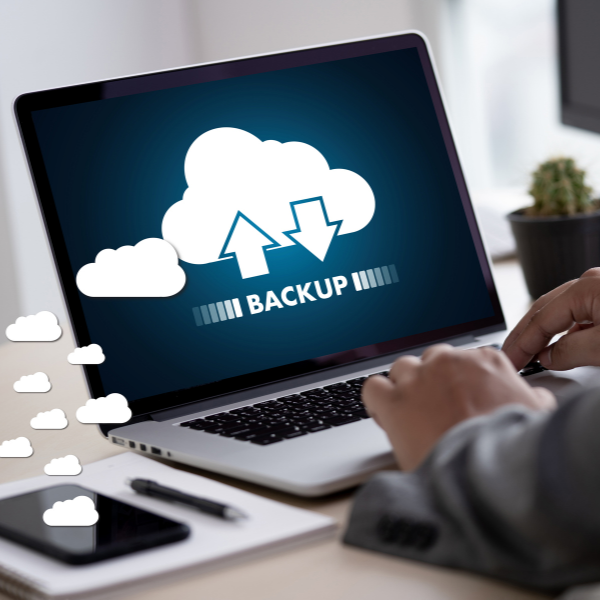
Data backup and recovery for PA businesses isn't just an IT checkbox. It's the safety net that determines whether a cyberattack, power outage or hardware failure becomes a minor disruption or a full-scale crisis
Let's walk through what this really means and what your business should be thinking about.
At its core, data backup and recovery for business is simple.
Backup means creating secure copies of your company's data.
Recovery means restoring that data quickly after it has been lost, corrupted or locked by ransomware.
That includes everything your team relies on every day, including:
A reliable business data backup solution should do more than store files. It should support fast recovery, secure off-site storage and ongoing monitoring to ensure your information is protected when you need it most.
The real question isn't whether you have backups. It's whether you could restore operations fast enough to avoid serious disruption.
Companies in this region face a mix of digital and physical risks.
If your data exists only in one place, even temporarily, your business is exposed.
You may have heard of the 3-2-1 rule. It remains the gold standard for business data protection. Many organizations implement the 3-2-1 framework as part of a broader business data backup strategy designed to improve resilience and reduce downtime.
Here's what it means in plain terms.
For example, your primary server might sit in your office. A local backup device gives you fast restoration if someone deletes a file. An encrypted cloud backup stored in a separate data center protects you if your building experiences fire, flood or major equipment failure.
This layered approach is what gives businesses in Eastern and Central Pennsylvania true resilience.
When we talk about data backup and recovery for Pennsylvania businesses, two concepts matter most.
Recovery Time Objective, or RTO, answers this question:
How long can your business afford to be down?
If your Lehigh Valley manufacturing company cannot function without its ERP system for more than four hours, your recovery plan must meet that expectation.
Recovery Point Objective, or RPO, answers a different question:
How much data can you afford to lose?
If losing an entire day of transactions would be damaging, your backups must run more frequently than once per day.
These are not technical metrics. They are business decisions. And they shape the type of backup and disaster recovery solution your company needs.
Some businesses still rely only on a local backup device. That can work for quick file restores, but it does not protect you if your building experiences a disaster.
Others rely only on cloud backup. Cloud storage is critical for off-site protection, but restoring entire systems can take time without local support.
For most businesses in the Lehigh Valley, Philadelphia, Lancaster and the surrounding areas, a hybrid approach makes the most sense. Hybrid backup solutions combine local recovery speed with secure off-site protection, making them one of the most effective approaches for business continuity planning.
If you operate in healthcare, financial services, legal or government contracting, documented backup and disaster recovery procedures are not optional.
Auditors increasingly expect proof. When were backups last tested? How quickly can systems be restored? Is data encrypted at rest and in transit?
Even if your industry does not have strict regulations, customers expect responsible data stewardship. A structured backup strategy protects both your operations and your reputation.
Many organizations assume they are protected until something goes wrong.
If you're unsure when your last successful backup occurred, that is a red flag. If you have never tested a full system restore, that is another. If recovery would take days instead of hours, your business continuity plan needs attention.
Businesses across Reading, Lancaster and Harrisburg often discover weaknesses only after an outage forces them to look closely.
A proactive review is far less stressful than an emergency recovery.

Most businesses need at least daily backups. Companies with high transaction volumes may require hourly or continuous backups.
Cloud backup is essential, but combining it with local backup typically provides faster recovery and stronger protection.
With a properly configured disaster recovery system, many businesses can restore operations within hours rather than days.
Yes. Small and midsize organizations are frequent targets of ransomware and often lack built-in redundancy.
Building a resilient backup and recovery strategy requires more than simply storing copies of your data. Explore these additional resources to strengthen your business continuity planning.
Learn how modern backup solutions protect critical business data and support faster recovery after outages, cyberattacks and hardware failures.
Discover how proactive monitoring, cybersecurity and ongoing support help reduce risk and improve operational stability.
Understand the steps organizations take to restore systems, applications and operations after a major disruption.
Data backup and recovery for business in Eastern and Central Pennsylvania is about more than technology. It's about stability. It's about protecting your employees, your customers and your ability to operate.
When your backup strategy is well-designed and regularly tested, downtime becomes manageable instead of catastrophic.
If your organization has not reviewed its backup and disaster recovery systems recently, this is the right time.
Schedule a Free Tech Review and get clarity on where your business stands. A proactive conversation today can prevent serious disruption tomorrow.

Most businesses rely on technology for nearly every part of their daily operations. Email, file access, accounting systems, cloud applications,...

Most businesses depend on data to keep daily operations moving. Customer records, financial information, email, Microsoft 365 files and...

Searching for the best managed IT (information technology) services for your business can be challenging. There are many questions to ask to ensure...