

Managed Print Services: A Game-Changer for Business
Does managing your business print fleet take too much of your IT team's time? A seamless and efficient printing process is crucial in today's...
16 min read

Running out of toner during a busy workday, dealing with another unexpected repair bill or pulling your IT team away from important projects to troubleshoot a printer? These everyday frustrations can cost your business more than you realize.
Managed Print Services (MPS) help businesses reduce those interruptions while gaining better control over printing expenses. Through proactive maintenance, automated toner replenishment and ongoing print management, MPS can help your team spend less time managing printers and more time getting work done.
But are Managed Print Services worth the investment for your organization?
The answer depends on your current printing costs, equipment, workflows and support needs. Understanding where you're losing time and money is the first step toward determining what MPS could save your business.
In this guide, you'll learn how Managed Print Services reduce costs, improve productivity and free up IT resources. You'll also discover how to evaluate potential return on investment and determine whether MPS makes financial sense for your company.
The biggest benefits of Managed Print Services include lower printing costs, reduced IT workload, less employee downtime and more predictable expenses. By proactively managing printers, supplies, maintenance and device performance, MPS helps businesses eliminate unnecessary spending and spend less time dealing with printing problems.
Key benefits include:
The specific savings depend on your current print environment, but the goal is the same: reduce the resources your organization spends managing printers while keeping employees productive.
Managed Print Services provide a coordinated approach to managing your organization's printers, copiers, supplies, maintenance and printing costs.
Instead of handling each printer issue separately, your business works with a provider to monitor and manage its print environment.
A typical MPS program includes:
Some programs also include print security, document workflow improvements and additional software solutions.
The exact services depend on your provider and agreement. Understanding what's included is essential when comparing Managed Print Services pricing and estimating your potential return on investment.
When businesses evaluate printing costs, they often focus on the obvious expenses, such as paper, toner, service and equipment leases.
Those costs matter, but they're only part of the picture.
The larger expense may be the time and productivity lost managing an inefficient print environment.
Think about how often employees stop what they're doing to deal with a printer issue. Maybe they're searching for a device that works, waiting for a repair, tracking down toner or contacting IT because they can't print an important document.
Individually, these interruptions seem minor. Across an entire company, they can add up to significantly lost productivity.
IT teams face similar challenges. Instead of working on cybersecurity, infrastructure improvements or strategic technology initiatives, they're pulled into troubleshooting copier error codes, updating print drivers or coordinating service calls.
These routine tasks consume valuable time that could be spent on projects that move your business forward.
There are also hidden operational costs that many organizations don't recognize until they conduct a print assessment, including:
Without accurate reporting, it's difficult to understand how these expenses affect your organization or where opportunities for improvement exist.
A Managed Print Assessment can provide a clearer picture of your current print environment, identify hidden costs and highlight practical ways to improve efficiency without disrupting daily operations.
Managed Print Services save money by helping businesses optimize equipment, reduce supply waste, minimize avoidable repairs and gain better control over printing expenses.
Reducing printing costs isn't simply about printing less. It's about creating a more efficient, predictable and strategically managed print environment.
An MPS program begins with an assessment of your existing print infrastructure. By analyzing device usage, print volumes, service history and supply consumption, your provider can identify opportunities to eliminate waste and improve efficiency.
Here are some of the most important ways Managed Print Services can reduce your organization's printing costs.
Many organizations accumulate printers over time without a long-term strategy.
As departments grow or relocate, they add devices wherever they're needed. This can result in too many printers, outdated equipment or multiple devices performing the same function.
An optimized print fleet ensures each device is appropriately placed, properly utilized and aligned with your organization's needs.
For example, a department may have several desktop printers that require separate toner purchases and maintenance. Depending on employee workflows, a shared multifunction printer could provide the same functionality while reducing the number of devices that need to be supported.
Fleet optimization doesn't necessarily mean replacing every printer or reducing access to printing. It means ensuring your organization has the right equipment in the right locations.
Unexpected breakdowns don't just generate repair costs. They also create downtime and disrupt employee productivity.
With proactive monitoring and preventive maintenance, you can identify and resolve many issues before they become major problems.
Proper maintenance helps extend device life, reduce service interruptions and minimize avoidable emergency repairs.
A coordinated MPS program can also simplify service
Running out of toner at the wrong time can interrupt important work, while overordering supplies ties up unnecessary budget.
Managed Print Services use device monitoring to help ensure supplies are replenished when they're actually needed.
This reduces emergency orders, minimizes excess inventory and simplifies purchasing for your team.
Instead of having employees manually check toner levels, track inventory and place orders, your MPS provider can manage covered supplies based on actual usage.
The result is a more efficient supply process with fewer interruptions and less unnecessary spending.
Not every printing expense comes from equipment and supplies. Sometimes, the way employees print creates avoidable costs.
Print management policies can help businesses reduce waste without preventing employees from accessing the documents they need.
Depending on your equipment and software, these policies may include:
These changes can help reduce paper and toner consumption while supporting more responsible printing practices.
Many organizations don't have a clear understanding of how much they're spending on printing or where those costs originate.
Comprehensive reporting provides insights into print volumes, device utilization, color versus black-and-white printing, departmental usage and other important metrics.
For example, reporting may reveal that one department uses significantly more color printing than others or that an expensive device is rarely used.
With accurate data, business leaders can make informed decisions that reduce waste and improve long-term cost control.
One financial benefit of Managed Print Services is the opportunity to make printing expenses easier to forecast.
Rather than reacting to unexpected repairs, fluctuating supply purchases or separate service invoices, organizations can benefit from a structured approach to print management.
Depending on the agreement, MPS can consolidate many printing expenses into a more predictable billing structure.
However, pricing models vary. Equipment, paper, minimum print volumes, overage charges and certain services may be billed separately.
Before signing an agreement, make sure you understand what's included and how your costs may change as your printer needs evolve.
For a closer look at the factors that influence MPS expenses, read our guide to Managed Print Services pricing in Pennsylvania.
Managed Print Services save time by reducing routine printer maintenance, automating toner management and shifting many print-related support responsibilities away from internal employees.
While reducing costs is often the first reason businesses consider MPS, the productivity benefits can be just as important.
When employees and IT teams spend less time dealing with printer problems, they have more time to focus on work that supports your business.
For many IT departments, printers are a recurring source of interruptions.
Installing drivers, troubleshooting connectivity issues, coordinating repairs and responding to toner requests can consume valuable time each week.
Managed Print Services reduce that administrative burden through proactive monitoring, automated toner management and expert support.
Depending on your agreement, your MPS provider may handle routine device maintenance, service coordination, troubleshooting and supply replenishment.
That allows your IT team to spend more time strengthening cybersecurity, modernizing infrastructure, supporting end users and advancing strategic technology initiatives.
For organizations with limited internal IT resources, reducing printer-related support requests can be especially valuable.
It also allows your team to concentrate on higher-priority responsibilities while your print environment receives dedicated support.
When a printer isn't working, employees may need to search for another device, wait for technical support or delay important tasks while an issue is resolved.
These interruptions can affect more than the employee experiencing the problem.
A delayed invoice, customer document or production order can disrupt an entire workflow.
By improving device reliability and ensuring printers are properly maintained, Managed Print Services help minimize these disruptions.
Employees spend less time troubleshooting and more time serving customers, collaborating with colleagues and completing their work.
Managing multiple printers, locations and vendors can quickly become time-consuming, especially as your organization grows.
Without a coordinated approach, different offices may have separate service agreements, supply purchasing processes and maintenance schedules.
Managed Print Services centralize many of these responsibilities, giving businesses greater visibility into their print environment.
Instead of juggling multiple service providers, ordering supplies manually or tracking equipment across locations, organizations benefit from a more streamlined approach.
This can be particularly valuable for businesses with multiple offices or distributed teams.
Traditional printer support often begins when something goes wrong.
An employee reports an error, contacts IT or submits a service request. Someone needs to diagnose the issue and coordinate a resolution.
Managed Print Services takes a more proactive approach.
Remote monitoring can identify low toner levels, service alerts and certain device performance issues before they cause major disruptions.
This allows supplies and maintenance to be scheduled more efficiently and can reduce the number of unexpected interruptions your employees experience.
Not every problem can be prevented, but proactive management can help your organization spend less time responding to avoidable issues.
Every minute spent dealing with printer issues is time that isn't spent on other responsibilities.
By reducing interruptions, improving device reliability and simplifying print management, MPS can create a more productive work environment for everyone, from front-line employees to executive leadership.
The result isn't just a more efficient print fleet. It's a more efficient approach to supporting your organization's daily operations.
Our free Managed Print Buyer's Guide - From Chaos to Control explains what to look for in an MPS provider, the questions to ask during your evaluation and how to compare solutions with confidence.
Download the Free Managed Print Services Buyer's Guide.
Every organization's print environment is different, which means the return on investment from Managed Print Services will vary.
Rather than focusing on a single savings percentage, it's more useful to evaluate the financial and operational improvements that contribute to your business results.
Start by establishing a baseline for your current printing expenses and the time your employees spend managing printers.
Looking only at toner, paper and equipment doesn't provide the full picture.
Your total cost of printing may include:
Understanding these costs helps you compare your current environment with a proposed MPS program.
It also helps you identify which expenses could be reduced, which would remain and which may change under a new agreement.
Not sure what your current print environment is actually costing you?
Fraser's free Print Cost Calculator can help you estimate your annual printing spend, cost per page and potential savings using information about your print volume, equipment, maintenance and IT support.
You can also account for the time your IT team spends supporting printers, which can reveal costs that don't always appear on a supply or service invoice.

It takes about two minutes, requires no sign-up, and gives you an immediate cost breakdown you can use as a starting point for evaluating your print environment.
One of the most overlooked MPS benefits is the time employees and IT professionals recover when routine printing problems decrease.
Consider a business where employees and IT staff collectively spend 10 hours each month dealing with printer problems, ordering supplies and service coordination.
At an estimated labor cost of $40 per hour, those interruptions represent $400 in staff time each month, or $4,800 annually.
If Managed Print Services reduce that workload by half, the business could recover approximately $2,400 worth of staff time each year.
That doesn't necessarily mean $2,400 in direct payroll savings. Instead, it represents time employees can redirect toward customer service, IT projects and other productive work.
Your organization can estimate the value of recovered staff time using this calculation:
Monthly hours saved x hourly labor cost x 12 = Annual productivity value
This example is illustrative. Your actual results will depend on your current support workload, labor costs and the responsibilities covered by your MPS agreement.
Recovered staff time and direct expense reductions are both valuable, but you shouldn't treat them as interchangeable.
Direct savings may come from reducing unnecessary equipment, lowering supply expenses, avoiding certain repair costs or eliminating redundant service agreements.
Productivity improvements represent time your team can redirect toward other work.
When evaluating ROI, measure these categories separately to avoid overstating your MPS program's financial impact.
Once you've established your current expenses, compare them with the full cost of the proposed Managed Print Services agreement. Consider the following areas;
| Cost Category | Current Print Environment | Proposed MPS Program |
| Equipment | Purchases, leases and replacements | Depends on equipment ownership and agreement |
| Toner and supplies | Internal purchasing and inventory management | Covered supplies may be automatically replenished |
| Maintenance | Internal coordination and separate service expenses | Covered maintenance is managed by the provider |
| IT support | Internal staff handle print-related requests | Provider assumes agreed support responsibilities |
| Reporting | May require separate tools or manual tracking | Reporting is typically included |
| Budgeting | Multiple expenses across devices and vendors | Consolidated or usage-based pricing, depending on the agreement |
The goal is to understand the total cost of each approach, not simply compare your current toner bill with a proposed monthly service fee.
An MPS program should provide ongoing visibility into the metrics that matter to your organization.
Depending on your business goals, those metrics may include:
Comparing these measurements against your original baseline helps you understand whether the program is delivering the expected value.
It also allows your provider to identify additional opportunities for improvement as your business changes.
A print cost estimate is a useful starting point, but it can't show you everything happening across your fleet.
A Free Managed Print Assessment takes a deeper look at your devices, usage, costs, workflows and support needs to identify inefficiencies and opportunities for improvement.
If you've calculated your costs and want to understand where your organization could improve, an assessment can help turn those numbers into a practical print strategy.
Request Your Free Managed Print Assessment
Managed Print Services can be a worthwhile investment when printing has become expensive to support, difficult to manage or a recurring distraction for employees and IT teams.
However, not every organization needs a comprehensive MPS program.
The value depends on your printing needs, equipment, business goals and how much time your team currently spends managing printers.
Here are several signs that your organization may benefit from Managed Print Services.
Managing several printers across one or more offices often means juggling different service schedules, supply orders and maintenance needs.
An MPS program brings these responsibilities under a coordinated strategy, making it easier to manage your print environment and maintain consistent performance.
It can also help ensure equipment is appropriately distributed as your organization grows.
Printers shouldn't prevent your IT team from focusing on cybersecurity, infrastructure, cloud initiatives or strategic projects.
If printer support has become a recurring source of help tickets, Managed Print Services can reduce that burden through proactive monitoring, automated toner management and expert support.
Many organizations know how much they spend on paper and toner but lack complete visibility into the total cost of printing.
Without reporting and analytics, it's difficult to identify unnecessary devices, excessive printing or opportunities to improve efficiency.
A Managed Print Assessment provides the data needed to make informed business decisions, rather than relying on assumptions.
Today's multifunction printers process, store and transmit sensitive information.
Organizations in healthcare, financial services, education, manufacturing and other industries may need additional controls to protect documents and support their security and compliance requirements.
Managed Print Services can improve visibility, strengthen print security and support document protection as part of a broader information security strategy.
Depending on your equipment and agreement, available controls may include secure print release, user authentication, access restrictions and device security management.
Your provider should explain which security responsibilities are included and how its services support your organization's requirements.
As your business expands, so do your printing needs.
Opening new locations, hiring additional employees or introducing new workflows can place added demands on your print infrastructure.
A well-designed MPS program can adapt alongside your organization, helping ensure your print environment continues to support your business without creating unnecessary complexity.
Not every organization needs a comprehensive Managed Print Services program.
If your business has only a few employees, one or two printers, very low print volumes and little demand on your IT team, your current approach may already be meeting your needs.
A smaller organization with two multifunction copiers and several printers, frequent service issues or limited IT resources may have a different experience.
Business size alone doesn't determine whether MPS is worthwhile.
The key is understanding where your organization stands today and whether the potential benefits justify the investment.
A Managed Print Assessment can help you make that decision using information about your actual print environment.
Not all Managed Print Services providers offer the same level of expertise, support or strategic guidance.
Choosing a provider involves more than comparing monthly prices. You also need to understand how each company approaches assessments, ongoing support, security and continuous improvement.
Before signing an agreement, ask the following questions.
Your provider should clearly explain how it will establish a baseline for your current print environment and measure improvements over time.
Ask what metrics will be tracked and how frequently you'll receive performance reports.
Meaningful measurements may include device utilization, print volumes, uptime, service response times, printing expenses and IT support requirements.
Moving to Managed Print Services doesn't necessarily mean replacing every printer you own.
Many existing devices can remain part of a well-designed MPS program, depending on their age, condition, capabilities and operating costs.
Ask how the provider evaluates your current equipment and determines which devices should stay, be relocated or eventually be replaced.
Reporting should provide more than basic print counts.
Ask whether you'll receive ongoing insights into print volumes, supply usage, device performance, security recommendations and opportunities for continuous improvement.
The more visibility you have into your print environment, the easier it becomes to make informed business decisions.
Printers are connected devices that often process sensitive business information.
Ask how the provider helps secure print devices through firmware updates, user authentication, secure print release, access controls, encryption and ongoing monitoring.
Clarify which security controls are included in your agreement and which responsibilities remain with your internal IT team.
Print security should support your broader cybersecurity strategy, not operate separately.
Your print environment will likely change over time.
Whether you're opening new locations, hiring additional staff or adopting new workflows, your MPS provider should be able to adapt your print strategy as your business evolves.
Ask how equipment, service coverage and pricing can change during the agreement.
Before signing any agreement, make sure you understand exactly what's included.
Ask about response times, preventive maintenance, automated supply replenishment, remote monitoring, help desk support and how service requests are handled.
You should also understand equipment responsibilities, contract terms, usage allowances and any potential additional charges.
Clear expectations today can help prevent surprises later.
An effective Managed Print Services provider does more than maintain printers.
Your provider should work alongside your organization to improve efficiency, reduce unnecessary costs, strengthen security and support your long-term business goals.
The partnership should leave your team with fewer day-to-day printing concerns, better visibility into your environment and greater confidence that your print infrastructure is supporting your business.
Choosing the right provider doesn't have to be overwhelming.
Our free Managed Print Services Buyer's Guide - From Chaos to Control, includes an evaluation checklist, questions to ask during vendor interviews, common contract pitfalls to avoid and practical tips to help you compare providers with confidence.

Q: What are the biggest benefits of Managed Print Services?
A: Managed Print Services can help reduce printing costs, minimize downtime, improve device reliability, strengthen print security, simplify supply management and reduce the amount of time IT spends supporting printers.
The specific benefits depend on your current print environment and where inefficiencies exist.
Q: How do Managed Print Services save money?
A: Managed Print Services save money by optimizing your printer fleet, reducing unnecessary supply purchases, minimizing avoidable repairs and providing better visibility into printing expenses.
Proactive monitoring and preventive maintenance can also help reduce costly downtime.
The amount your business saves depends on your current printing costs, equipment and service agreement.
Q: How do Managed Print Services save time?
A: Managed Print Services save time by automating toner replenishment, proactively monitoring devices and shifting routine printer maintenance responsibilities away from your internal team.
Employees spend less time dealing with printer problems, while IT professionals can focus on cybersecurity, infrastructure, user support and other business priorities.
Q: Are Managed Print Services worth it for small businesses?
A: They can be, but business size alone doesn't determine whether MPS is worthwhile.
A smaller organization with several printers, frequent service issues, limited IT resources and little visibility into printing costs may benefit from MPS.
A business with one or two devices and minimal printing needs may not need a comprehensive program.
A Managed Print Assessment can help determine whether the potential benefits justify the investment.
Q: Can Managed Print Services work with our existing printers?
A: Often, yes.
Moving to Managed Print Services doesn't necessarily mean replacing every printer you own.
A provider should evaluate your existing fleet, including device age, condition, usage, capabilities and operating costs, before recommending which equipment should stay, be relocated or eventually be replaced.
Q: How are Managed Print Service savings measured?
A: Savings should be measured against a baseline of your current print environment.
Depending on your goals, that can include total printing costs, print volumes, device utilization, service expenses, IT support time, supply consumption, downtime and other operational costs.
Ongoing reporting can then show where performance has improved and where additional opportunities remain.
Q: What should be included in a Managed Print Services agreement?
A: An agreement should clearly explain what's covered, how services are delivered and how costs are calculated.
Review areas such as maintenance, supplies, monitoring, reporting, service response expectations, security support, equipment responsibilities, contract terms and what happens when your organization's needs change.
Managed Print Services can deliver meaningful value when printing has become difficult to manage, expensive to support or a recurring distraction for employees and IT teams.
The benefits extend beyond lower toner or service costs.
A well-managed print environment can improve productivity, create more predictable expenses, reduce downtime, strengthen security and give your organization better visibility into how it uses its resources.
The key is understanding where you stand today.
Before changing your equipment or committing to an MPS agreement, build a clear picture of your current print environment.
Look at what you're spending, how your devices are used, where employees experience problems and how much time your IT team spends on print-related support.
With that information, you can evaluate the potential financial and operational benefits of MPS and determine whether the investment makes sense for your business.
You don't have to guess whether Managed Print Services will save your business time and money.
A Managed Print Assessment takes a closer look at your devices, usage, costs, workflows and support needs to identify inefficiencies and opportunities for improvement.
You'll gain a clearer understanding of your current print environment and where a more proactive approach could reduce unnecessary expenses and improve productivity.
Request your free Managed Print Assessment to discover where your organization can reduce costs, recover valuable staff time and build a smarter approach to print management.

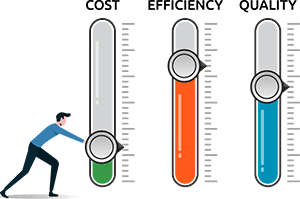
Does managing your business print fleet take too much of your IT team's time? A seamless and efficient printing process is crucial in today's...
Network printer security risks are vulnerabilities that allow cybercriminals to access, compromise or use a connected printer as a pathway into a...

Quick Answer: How Much Do Managed Print Services Cost in Pennsylvania? Most Pennsylvania businesses spend between $100 and $2,500+ per month on ...